Soaker Hoses vs. Sprinklers: Which Is Better for Efficient Watering?
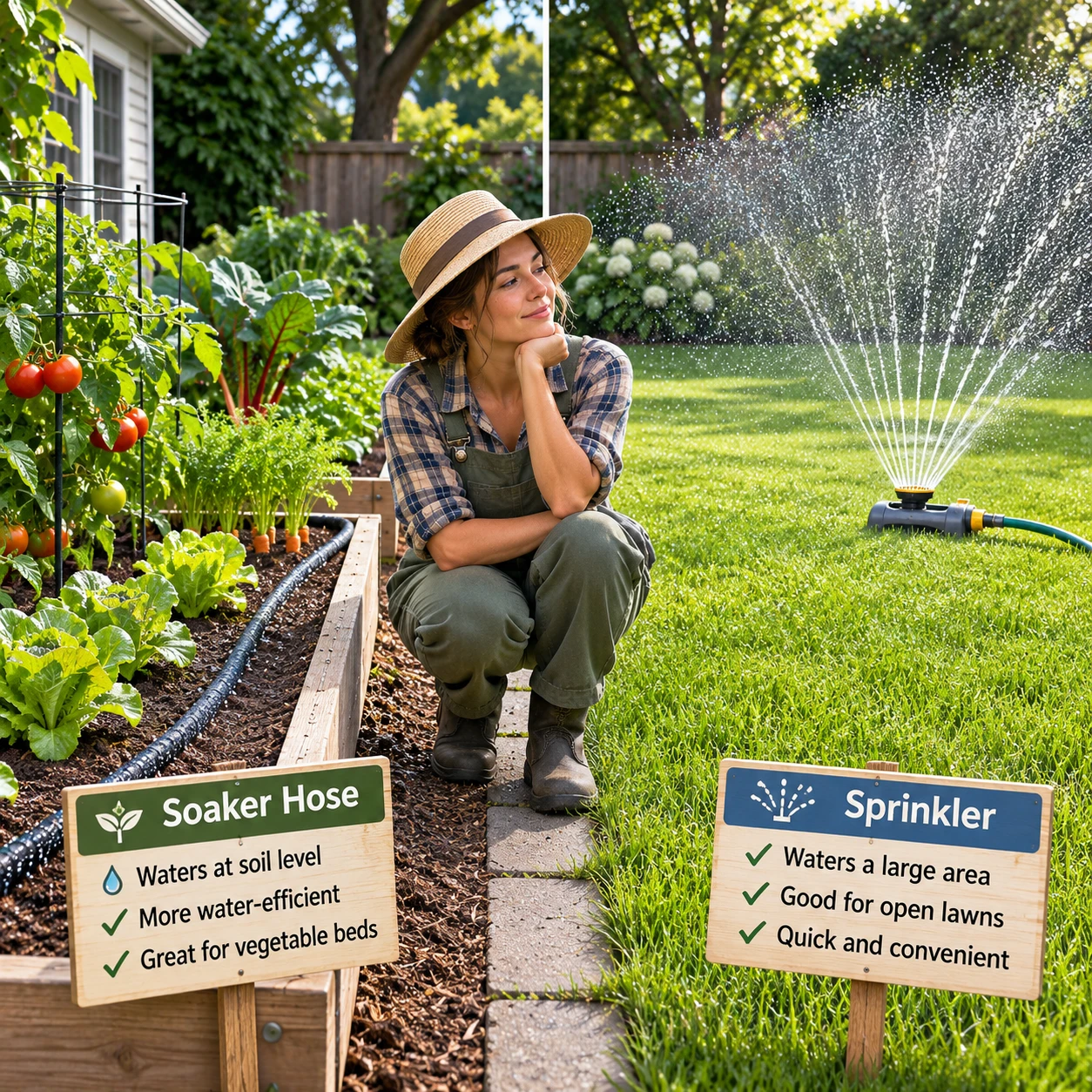
Soaker hoses and sprinklers can both keep a garden healthy, but they deliver water in very different ways. A soaker hose releases water slowly along its length near the soil, while a sprinkler sprays water over a broader area. The more efficient choice depends on your plants, garden layout, soil type, water pressure, and how carefully you manage the watering schedule.
Use this comparison to match each method to the job. In some gardens, a combination works best: targeted root-zone watering for planted beds and overhead coverage for a lawn or open patch.
How Soaker Hoses and Sprinklers Work
A soaker hose seeps water through porous material or small openings along the hose, delivering moisture close to plant roots. A sprinkler sends water through a nozzle or rotating head and distributes it across a selected area.
To use a soaker hose, lay it along a row or through a bed, connect it to a faucet or garden hose, and turn the water on at a suitable pressure. Water moves gradually into nearby soil. Many soaker hoses work best at low pressure; excessive pressure can cause uneven flow or strain the hose. A pressure regulator may help when the supply is strong, while a long hose run can sometimes deliver less water toward its far end.
A sprinkler connects to a hose and sprays water through the air. Depending on the model, it may cover a fixed circle, an adjustable arc, or a rectangular area. Setup is usually quick: place it where the spray can reach the intended ground, then adjust its position or settings. Sprinklers need enough water pressure to produce their intended spray pattern, but too much pressure can create fine droplets that drift or evaporate more readily.
Both methods need observation after setup. Run the system briefly and check where the water lands. A hose that misses the outer plants or a sprinkler that waters the path wastes time and water, even if the equipment itself is working properly.
Watering Efficiency and Coverage
Soaker hoses usually direct water toward the root zone, while sprinklers provide wider overhead coverage. Either method can be efficient when its placement, pressure, and timing suit the garden; neither guarantees lower water use in every situation.
Because a soaker hose releases water at ground level, it can limit wetting of plant foliage and reduce exposure to wind and sun during delivery. This makes it useful for closely planted beds where water should soak into the soil around roots. However, a hose placed too far from plants, run for too long, or laid across uneven ground may leave some areas dry while others become saturated.
Sprinklers cover more ground at once, which is convenient for lawns and broad, open plots. Their main efficiency challenge is that water travels through the air before reaching the soil. Wind can carry spray away, and hot, sunny conditions increase evaporation. Some water may also land on leaves, pavement, or bare ground rather than where plants need it. Early-morning watering, when conditions are calmer and cooler, can help reduce these losses.
Soil type changes the result. Sandy soil drains quickly, so slower applications may help water soak in instead of moving below the roots. Clay soil absorbs water more slowly and can develop runoff if water is applied too fast. With either method, use pauses or shorter watering cycles when water begins to pool or run off. Check moisture beneath the surface rather than judging only by how wet the top looks.
Best Uses for Each Method
Soaker hoses are a strong fit for rows, raised beds, and closely spaced plants; sprinklers are generally more practical for lawns and large, open areas. Choose based on the shape of the planting and which parts of the garden need water.
Consider a soaker hose for:
- Vegetable rows where plants sit in a consistent line.
- Flower beds or borders with dense, closely spaced plants.
- Established shrubs or other plantings arranged along a bed.
- Gardens where keeping plant foliage dry is a priority.
A soaker hose is less convenient when plants are scattered across a wide area or when the layout changes often. It needs to be moved or repositioned to reach plants outside its path, and it may not distribute water uniformly over a very long run.
Choose a sprinkler for lawns, newly seeded ground, or larger open areas that need broad coverage. Sprinklers can also water vegetable gardens, especially when plants are spaced widely. The trade-off is that overhead water may wet foliage and spray paths or nearby structures. Adjust the spray pattern and placement so it reaches the intended soil without routinely soaking areas that do not need water.
For mixed gardens, using both can be simpler than forcing one method to do every job. A soaker hose can serve a narrow planting bed while a sprinkler covers the lawn. This approach works best when each zone has a clear purpose and watering schedule.
Pros and Cons to Consider
The main trade-off is targeted delivery versus broad coverage: soaker hoses water along a line near the soil, while sprinklers reach a wider area but can create overspray. Practical details such as setup, pressure, and garden shape often matter more than the equipment label.
- Soaker hose advantages: It delivers water close to roots, works well in rows and beds, and can reduce unnecessary wetting of foliage and paths when positioned carefully.
- Soaker hose limitations: It only waters near its route, may need seasonal repositioning, and can distribute water unevenly if the run is long or pressure is poorly matched.
- Sprinkler advantages: It covers broad spaces with little repositioning and is easy to move between lawn or garden areas.
- Sprinkler limitations: Wind, evaporation, and overspray can reduce the water reaching target plants. The spray may also wet foliage, which can be undesirable for some gardeners.
Both systems rely on a suitable water supply. A soaker hose is not automatically effective simply because it uses low pressure; it still needs enough flow to moisten the full length. A sprinkler also needs adequate pressure for its pattern, but pressure that is too high can make the spray less controlled. If coverage looks uneven, check the faucet, hose connections, kinks, and pressure before extending the watering time.
Drip irrigation is another option for gardeners who want highly targeted delivery through emitters or tubing. It can suit individual plants or complex beds, but it involves different components and setup. For a straightforward comparison, think of it as a more configurable form of root-zone watering, rather than assuming every garden needs it.
How to Choose for Your Garden
Choose a watering method by matching the garden’s size and layout to plant spacing, soil, and water needs. A soaker hose tends to suit narrow, planted beds; a sprinkler tends to suit broad, open ground.
Use this quick decision process:
- Map the planting: If plants form rows or a continuous bed, a hose can follow their root zones. If the area is open and wide, a sprinkler may cover it more conveniently.
- Consider plant type: Closely spaced vegetables and flowers often benefit from ground-level watering. Lawns and newly seeded areas typically need coverage across a continuous surface.
- Check the soil: In fast-draining sandy soil, apply water slowly and check how deep it reaches. In clay soil, watch for pooling and use shorter cycles if runoff starts.
- Test the water supply: Confirm that pressure and flow suit the hose or sprinkler. Look for dry spots and strong overspray before settling on a routine.
- Account for upkeep: A hose may stay in place through a growing season, but it can obstruct digging or be inconvenient in changing beds. A sprinkler is easier to move, though it needs repositioning to cover separate areas.
Garden layout can settle a close choice. For example, a long vegetable bed beside a lawn may call for a soaker hose in the bed and a sprinkler on the grass. If the same bed contains widely spaced plants, a hose may leave too much bare soil wet; repositioning or using drip irrigation could be more suitable.
Tips for More Efficient Watering
Water efficiently by checking soil moisture, adjusting run time to the garden’s conditions, and positioning equipment to keep water on the intended area. A schedule is a starting point, not a substitute for checking what the soil and plants need.
- Check below the surface. After watering, feel the soil a few inches down near the roots. If it is still dry, adjust the run time; if it is soggy or waterlogged, shorten the cycle or allow more time between watering.
- Run a coverage test. Watch a sprinkler in operation for dry patches, drift, and overspray. For a soaker hose, check soil at several points along its length, including near the far end.
- Use suitable timing. Water during cooler, calmer parts of the day when possible. Avoid running a sprinkler in strong wind, which can scatter its spray.
- Adapt to soil and weather. Rain, heat, and soil drainage all affect how often a garden needs water. Do not keep an unchanged schedule when conditions shift.
- Prevent runoff. If water pools or flows away, reduce the application rate or divide watering into shorter intervals with breaks between them.
How long either system should run depends on its output, the soil, and the depth of moisture needed. There is no reliable universal number of minutes. Start with a short test, inspect the soil, then adjust the schedule in small increments. This avoids the common mistake of increasing run time to fix a dry patch when the real issue is poor placement or uneven pressure.
Frequently Asked Questions
Are soaker hoses more water-efficient than sprinklers? They can be, particularly in planted beds where water needs to reach roots and avoid foliage or paths. But efficiency depends on setup, soil, pressure, wind, and timing. A badly placed soaker hose can waste water, while a well-adjusted sprinkler can cover an open area effectively.
Can a soaker hose work with low water pressure? Many are designed to operate at relatively low pressure, but they still need enough flow to wet the full hose. Check for kinks, blocked sections, or a run that is too long if the far end stays dry.
Are sprinklers suitable for vegetable gardens? Yes. They can work well for larger or widely spaced vegetable plots. For dense beds, a soaker hose may target the root zone more directly and limit foliage wetting.
How long should either system run? Run time varies with equipment output, soil type, weather, and plant needs. Test the soil after a watering cycle and adjust rather than relying on a fixed duration.
Can soaker hoses and sprinklers be used together? Yes. Use each in the area it suits, such as a soaker hose in vegetable rows and a sprinkler on the lawn. Give each area its own schedule based on its plants and soil.