The Advantages of Expandable Hoses for Small Gardens
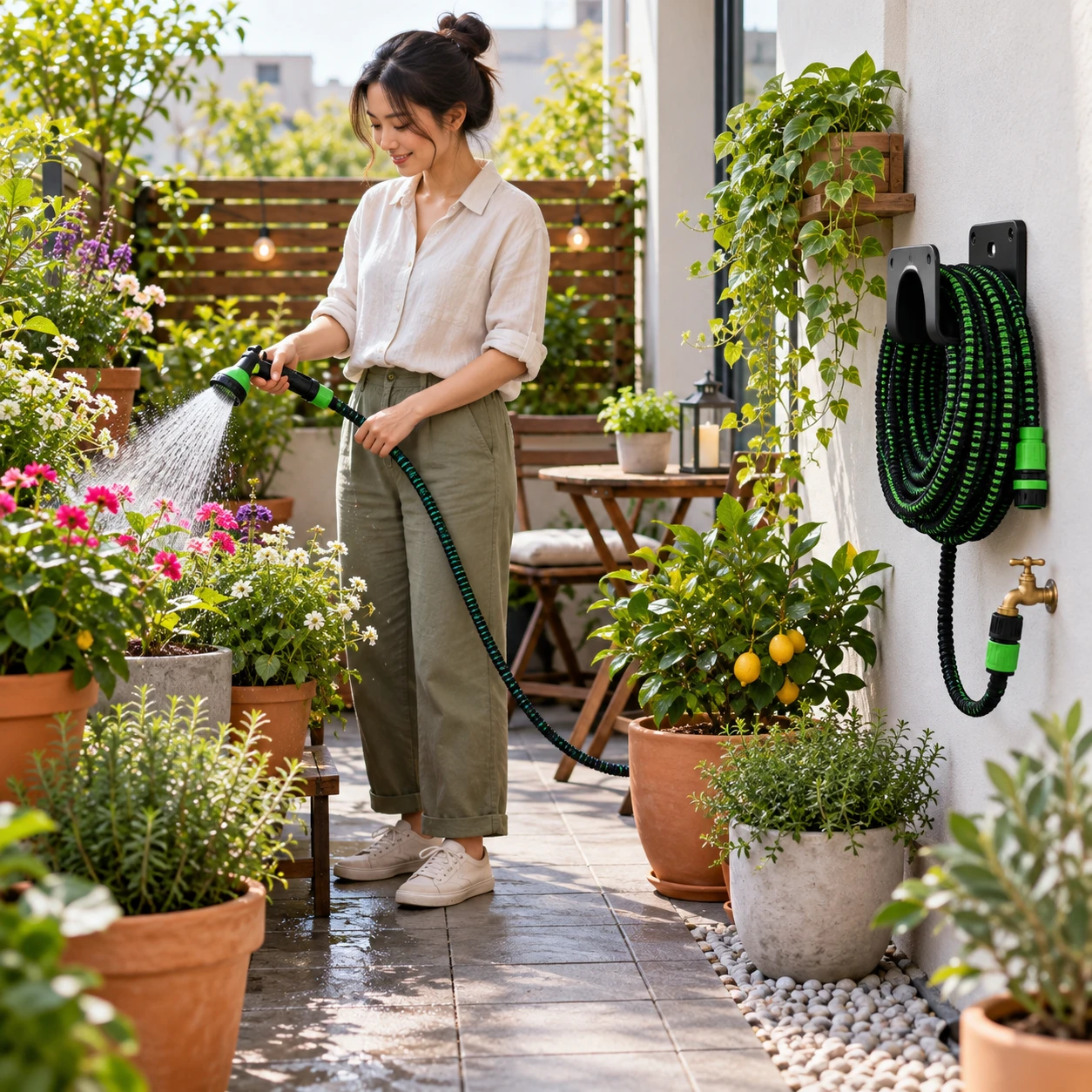
In a small garden, a hose can take up more room than the plants it waters. An expandable garden hose offers a compact alternative to a traditional garden hose, which may be bulky to carry, coil, and store in a limited space.
These hoses can make everyday watering easier, especially around patios, courtyards, and container gardens. They are not the right choice for every setup, though. Their performance depends on water pressure, careful handling, and the quality of the hose and fittings.
What Is an Expandable Garden Hose?
An expandable garden hose stretches longer when water flows through it and contracts as it drains. This design lets it take up less space between watering sessions than many traditional garden hoses.
Most models have an inner tube surrounded by a flexible outer layer. When you turn on the tap, water pressure fills the inner tube and causes the hose to expand. Once you shut off the water and release the remaining pressure, the hose shrinks toward its original size.
The stated hose length usually describes its expanded length, not the amount of space it occupies when stored. Expansion can vary with water pressure, so the hose may not reach its full advertised length in every garden. It is also wise to leave a little slack rather than pulling it taut to reach a distant plant.
A spray nozzle is commonly included, but check whether it is adjustable and compatible with the hose’s fittings. A nozzle that lets you switch between a gentle shower and a stronger stream can help with different watering tasks, from delicate seedlings to rinsing garden furniture.
Why Expandable Hoses Suit Small Gardens
Expandable hoses suit many small gardens because they are compact to store and easier to move through a confined space. Their reduced bulk can be useful on patios, in courtyards, and around modest garden layouts where a full-size hose is awkward.
A traditional garden hose may form a heavy loop across a narrow path or catch on the legs of outdoor furniture. An expandable model is generally lighter to handle, which can make it easier to carry from a tap to a group of pots or move between a small lawn and a raised bed.
That convenience matters most when watering involves several short trips. If you keep the hose in a storage box, utility cupboard, or small shed, a compact hose can be simpler to put away without leaving a large coil on the ground. It may also reduce the temptation to leave a hose stretched across a walkway.
However, compact storage does not guarantee easier watering in every situation. The hose still needs enough water pressure to expand, and its lighter construction may be less suited to rough treatment. For a small garden with smooth paths and regular, gentle use, the balance often works well. If the hose must drag over sharp gravel or rough edges, a more robust traditional hose may be a better fit.
Easier Storage and Everyday Handling
Expandable hoses are usually easier to carry and store than bulky traditional hoses, making them practical when storage space is tight. Their lightweight handling can also make daily watering less of a chore.
After watering, turn off the tap and allow the hose to drain so it can contract. You can then gather it into a loose coil or place it in a storage tub. Avoid tightly winding it around a small hook, since sharp bends and pressure on the fittings may stress the material over time.
For a simple storage routine:
- Shut off the tap and release the remaining water through the nozzle.
- Let the hose contract before putting it away.
- Store it out of direct sunlight when possible, and keep it clear of sharp tools or heavy objects.
In a compact garden, an expandable hose can be easier to lift off the ground and store between uses. But it is not completely immune to tangles or kinks. A twist near a connector can interrupt water flow, so straighten the hose gently rather than pulling hard. Some products advertise kink resistance, but construction and handling both affect how well a hose resists kinking in practice.
Reaching Plants Without the Bulk
An expandable hose can move more easily around containers, garden beds, and furniture because it is lighter and less cumbersome than many traditional hoses. That makes it useful when plants are grouped close together or tucked into narrow corners.
Instead of dragging a thick coil past every pot, you can guide the hose along a clear route and bring the spray nozzle to the plants. This is particularly handy for watering hanging baskets, planters beside a wall, and beds separated by a small patio table. A gentle spray setting helps avoid disturbing soil or flattening tender growth.
Before choosing a hose length, measure the path from the tap to the farthest plant, including the turns around obstacles. Add enough room to hold and maneuver the nozzle comfortably. A hose that reaches only when stretched tight can pull on the faucet connection or make it harder to water evenly.
Lightweight handling has a limit: the hose may snag on pointed edges, plant supports, or rough paving if you pull it across them. Lift it over obstacles where practical and avoid dragging it over sharp surfaces. For a garden with a short, clear route, its flexibility is a benefit; for a space with abrasive ground or frequent heavy use, durability deserves more weight in the decision.
What to Consider Before Choosing One
Choose an expandable hose by checking its usable length, your available water pressure, the fittings, and its construction. Those factors determine whether it will work reliably for your garden and watering routine.
Match hose length to your layout
Measure from the outdoor tap to the farthest point you need to water, then account for the route around furniture and beds. Select a hose with a little extra reach, but avoid buying a much longer model than necessary. More length can mean more hose to manage, and advertised dimensions may assume sufficient water pressure for full expansion.
Check water pressure and fittings
An expandable hose relies on water pressure to extend. If your supply is weak, it may expand less than expected or deliver a less satisfying flow, especially when a spray nozzle is attached. Check the manufacturer’s pressure guidance and compare it with your setup if you know your household water pressure. Make sure the connectors fit your tap and nozzle, and that any washers are seated correctly to reduce leaks.
Look beyond the advertised benefits
Hose durability varies with materials, fittings, storage, and how the hose is used. A reinforced outer layer and solid connectors may be useful, but no design can make a hose safe from punctures or damage caused by excessive pressure, sharp edges, or being run over. Read the care instructions and warranty terms rather than assuming every expandable hose has the same service life.
Expandable hoses trade some ruggedness for light weight and compact storage. If your main priority is a hose that can withstand frequent dragging across rough ground, a traditional garden hose may be the more practical option. If your priority is easy handling in a small, tidy space, an expandable model may be a better match.
How to Care for an Expandable Hose
To help protect an expandable hose, drain it after use, store it away from prolonged sun and sharp objects, and avoid stretching or pressurizing it beyond the maker’s instructions. Simple handling habits can reduce unnecessary strain on the hose and its fittings.
- Drain it after watering. Turn off the tap, open the nozzle, and let the water run out so the hose can contract before storage.
- Avoid excessive pressure. Follow the manufacturer’s limits and do not leave the hose pressurized when it is not in use.
- Protect it from abrasion. Lift it over sharp edges, tools, and rough surfaces instead of pulling it across them.
- Store it carefully. Keep the hose in a shaded, sheltered place when possible, and avoid crushing it under pots or equipment.
- Check connectors periodically. Look for loose fittings, worn washers, splits, or leaks before they become harder to manage.
Do not assume a hose is safe to leave outside just because it is designed for garden use. Sun exposure, temperature changes, and weather can affect materials, while freezing water can damage a hose. If you must leave it outdoors, follow the product’s storage guidance and keep it drained and protected as much as possible.
Frequently Asked Questions
For a small garden, choose a hose that reaches the farthest plant with a little slack, works with your water pressure, and can be stored safely. The answers below cover common questions before you buy.
How long should an expandable hose be for a small garden?
Measure from the tap to the farthest watering point, following the route around furniture and beds, then add a modest allowance for movement. Choose a hose that reaches without being pulled tight. Remember that the advertised length is typically the expanded length and depends on water pressure.
Does an expandable hose need high water pressure?
It needs enough water pressure to expand, but the exact requirement varies by product. With low pressure, a hose may not reach its full length. Check the manufacturer’s guidance, and consider how much flow you need from the spray nozzle as well as whether the hose expands at all.
Can an expandable hose be left outside?
It is better to drain and store it in a sheltered place when you can. Long exposure to sun and weather may contribute to wear, and freezing water can cause damage. Follow the maker’s instructions if outdoor storage is unavoidable.
How can I help prevent leaks or damage?
Use compatible fittings, check that washers sit properly, avoid exceeding the recommended pressure, and drain the hose after use. Keep it away from sharp edges and do not drag it over rough surfaces. Inspect connectors and the hose body regularly; replace a damaged part or hose rather than relying on a temporary fix for a pressurized leak.